Authentic Nasi Goreng (No Packets)
Forget the soggy stir-fry vegetables and stale spice mixes. This is the real deal: dry rice, a fresh bumbu, and caramelized ketjap on screaming hot fire.
Jump to Recipe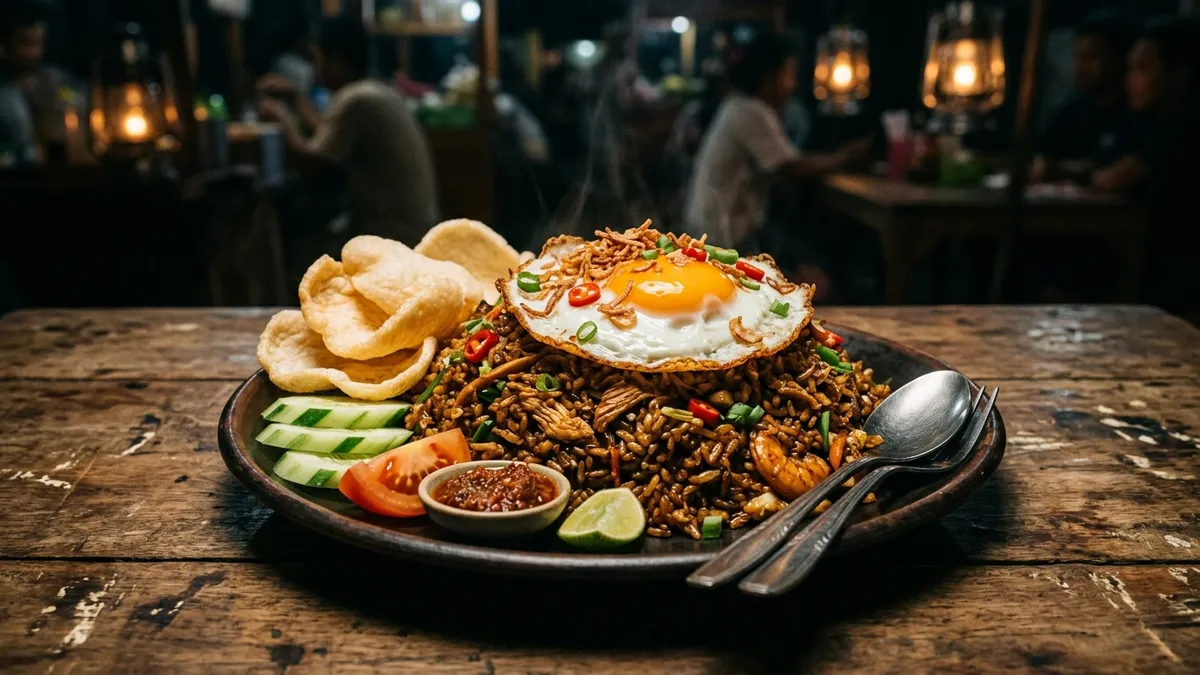
🧂Ingredientsfor 2 persons
- Cold jasmine rice (from yesterday)400g
- Shallots4 pieces
- Garlic3 cloves
- Red chili peppers2 mild, 1 spicy (bird's eye)
- Fresh galangal (laos)↳ Substitute: See our galangal replacement guide1 piece (2 cm)
- Trassi (fermented shrimp paste)1 tsp
- Ketjap Manis (Bango or ABC)2-3 tbsp
- Light soy sauce or a pinch of salt1 tsp
- Eggs (for Telur Mata Sapi)2 pieces
- Fried onions (Bawang Goreng)Generous handful
Let’s have a brutally honest conversation. What many of us in the West confidently call “Nasi Goreng” is, frankly, a culinary crime scene. You know the drill: you dump a massive bag of pre-cut “stir-fry vegetables” (mostly watery leeks and cabbage) into a lukewarm pan, shovel in some warm, sticky brown rice, and stir in a packet of dehydrated, salty dust from the supermarket. The result? A soggy, damp mountain of rice that has effectively been boiled rather than fried. The infamous Western Veggie-Pack Syndrome strikes again.
Real, authentic Nasi Goreng is an entirely different beast. The words literally translate to “fried rice,” not “steamed rice in vegetable water.” It is meant to be dry, intensely savory, exploding with umami, and carrying that signature, almost smoky wok-flavor (wok hei) that hits your senses when you walk the street food alleys of Jakarta. No flavor packets. No dehydrated veggies. And definitely no wet leeks. We are going back to basics, and trust me, once you do it this way, you will never look back.
The First Law of Nasi: Cold Rice
If you remember absolutely nothing else from this article, memorize this: you must always use old, cold rice. Ideally, you want jasmine rice that was cooked yesterday and has spent the entire night chilling in the refrigerator.
Why is this so non-negotiable? Freshly cooked rice is packed with steam and moisture. The starches clinging to the outside of the grains are soft, swollen, and sticky. If you throw that into a hot wok, everything fuses together into a massive lump and cements itself to the metal. The rice will literally steam in its own trapped moisture rather than fry. The end result is a depressing paste.
When you let rice cool overnight in the fridge, something magical happens in terms of food science. The grains dry out, and the starches undergo a process called retrogradation—they firm up and crystallize slightly. This allows you to easily break the grains apart with your fingers before cooking. In the wok, every single independent grain can then be beautifully coated with oil, spices, and sweet soy sauce without shattering. So, do yourself a favor: cook a massive batch of rice tonight, put it in the fridge, and be the king of the kitchen tomorrow.
The Soul of the Nasi: The Bumbu
The foundation of nearly every great Indonesian meal is the bumbu, a wet, freshly pounded spice paste. Throw away those jars of dried powder; we are getting the mortar and pestle (or the food processor) out. Here is what you are building:
- Shallots and Garlic: The absolute baseline. Use shallots instead of regular yellow onions—they are sweeter, more complex, and contain far less water.
- Chili Peppers: For both vibrant color and a serious kick. Use a couple of mild red chilies for fruity depth, and throw in one or two bird’s eye chilies (rawit) if you want to sweat.
- Trassi: Fermented shrimp paste. Yes, in its raw form, it smells exactly like something died in the ocean and was left to bake on the beach for a week. But hold your nerve. The second it hits the screaming hot oil, that pungent odor transforms into the deepest, most incredible umami backbone that will elevate your dish to restaurant-tier. (If you are strictly plant-based, use a dab of dark miso paste or finely pulverized dried shiitake mushrooms).
- Galangal (Laos): This is your secret weapon. It looks a bit like ginger but tastes like a sharp, citrusy, pine-scented dream. It is the exact ingredient that gives Nasi Goreng its unmistakable, authentic flavor that you simply can’t replicate with anything else. Can’t find fresh galangal? Don’t panic, check out our extensive galangal substitute guide to save your dinner.
Throw all of this into a mortar or a small food processor and obliterate it into a coarse paste. You will then fry this mixture in a generous glug of oil until the raw, harsh smell vanishes, the oil starts separating from the paste, and your entire kitchen smells irresistible. This takes about five minutes over medium-high heat.
The Ketjap Trick: Caramelization is Everything
Eating Nasi Goreng without Ketjap Manis (Indonesian sweet soy sauce) is like eating a burger without a bun. But we don’t just thoughtlessly squirt it over the rice. First, buy the good stuff: look for Indonesian brands like Bango or ABC. They are exponentially thicker, stickier, and more complex than the watery garbage sold in regular supermarkets.
Now, here is the elite technique. Once your cold rice is in the wok and heated through, push the rice up the sides to expose the hot bottom of the wok. Pour your ketjap directly onto the bare, screaming hot metal. The sugars in the sauce will instantly start bubbling, smoking, and aggressively caramelizing. Give it a few seconds, then aggressively scrape it up and fold it through the rice on maximum heat. Those slightly scorched, caramelized edges are what give the dish its profound, authentic depth. Just remember to balance that heavy sweetness with a splash of light soy sauce or a sharp pinch of salt!
Substitutes with Exact Ratios
Missing a crucial ingredient? Here is exactly how to hack it without ruining the dish:
1. Trassi (Shrimp Paste) Substitute Ratio: 1 tsp Trassi = 1 tsp dark miso paste + 1/2 tsp soy sauce. This provides the fermented, salty umami hit without the seafood funk.
2. Galangal (Laos) Substitute Galangal is piney and citrusy, completely different from spicy ginger. Ratio: 1 piece (2cm) Galangal = 1 tsp ginger + the zest of 1/4 of a lime. (See our galangal substitute guide for more details).
3. Ketjap Manis Substitute If you absolutely can’t find thick Indonesian sweet soy sauce. Ratio: 3 tbsp Ketjap Manis = 2 tbsp regular soy sauce + 2 tbsp dark brown sugar, reduced in a small pan until syrupy.
Substitute Comparison Table
| Original Ingredient | Best Substitute | Ratio | Flavor Difference |
|---|---|---|---|
| Trassi (1 tsp) | Dark Miso | 1 tsp miso + 1/2 tsp soy | Lacks the deep seafood funk, but hits the umami notes perfectly |
| Galangal (2cm) | Ginger + Lime zest | 1 tsp ginger + zest | Ginger is spicier; lime adds the missing citrus note of galangal |
| Ketjap Manis (3 tbsp) | Soy sauce + Brown sugar | 2 tbsp soy + 2 tbsp sugar | Less viscous, misses the molasses depth of authentic Bango |
The Battle Plan: Fire It Up
Here is how you execute, completely stress-free. Make sure every single ingredient (your pounded bumbu, cold rice, sauces) is sitting next to the stove, because once the fire starts, you don’t have time to think.
Step 1: Heat 2 to 3 tablespoons of neutral oil in your wok. Make sure it is properly hot. Step 2: Scrape in your fresh bumbu paste and fry it over medium-high heat until the aromatics explode and the moisture mostly evaporates (about 5 minutes). It should darken slightly, but do not let the garlic turn bitter and burn. Step 3: Crank the heat to absolute maximum. Add your cold, crumbled jasmine rice. Grab a wok spatula and aggressively work the rice through the bumbu. Keep it moving constantly! Step 4: The Ketjap Trick. Shove the rice aside, pour 2 to 3 tablespoons of Ketjap Manis onto the hot metal, let it bubble violently for three seconds, and then vigorously mix everything together. Step 5: Add your teaspoon of light soy sauce (or salt). Taste a spoonful. If it needs more salt, add it. If it needs more sweetness, add a drop of ketjap. Step 6: Wok everything for another two minutes on maximum heat. You actually want to stop stirring for 10-second intervals to let the rice lightly ‘toast’ against the iron, before violently scraping it loose again. This builds the wok-hei flavor.
The Biggest Pitfalls (Why Yours Failed Before)
If you’ve ever ruined Nasi Goreng, you almost certainly committed one of these sins:
- Wet and clumpy: You used warm, freshly cooked rice, or you secretly dumped in a handful of chopped zucchini and mushrooms which leaked water everywhere. Stop it. If you want vegetables, cook them in a separate pan and serve them on the side.
- Way too sweet: You were overzealous with the ketjap, used a cheap watery brand, and forgot to balance the sweetness with standard salt or light soy sauce.
- Tastes like nothing: You were terrified of the bumbu and didn’t use enough, or you didn’t fry it long enough at the start. Raw garlic and shallot paste needs time in the hot oil to mellow out and develop complexity.
- Missing that smoky flavor: Your wok wasn’t hot enough, or your pan was too small. You need a large carbon steel or cast iron wok, and you need to respect the fire.
Serving Like a Boss
You do not eat Nasi Goreng “naked,” even though it tastes incredible straight out of the wok. The presentation and side dishes make the entire experience.
First, you must fry a Telur Mata Sapi—which translates to ‘cow’s eye egg’. This is a sunny-side-up egg fried in a generous pool of screaming hot oil, meaning the bottom and edges get fiercely crispy and golden-brown, while the yolk remains completely liquid. When you break that yolk and it oozes all over your salty, sweet, smoky dry rice… my god, it’s heavenly.
Alongside this, serve some crispy krupuk (prawn crackers) for texture, a few slices of ice-cold cucumber to douse the chili heat, and a massive, shameless handful of bawang goreng (crispy fried shallots) scattered over the top. Got some extra time? A few skewers of chicken satay or some pickled vegetables (atjar tjampoer) on the side never hurt anyone.
Frequently Asked Questions (FAQ)
1. Can I use brown rice or basmati rice instead? Jasmine rice is the undisputed king for this dish because the grain is slightly shorter, plumper, and maintains the perfect chew while staying dry. Basmati is too long and fragile; it shatters when you wok it aggressively. Brown rice works, but it fundamentally changes the flavor profile into something very earthy and nutty, steering you far away from the authentic street-food experience.
2. Do I really have to use trassi? The smell is horrifying. Yes, you really should use it, unless you are strictly vegetarian/vegan or have a shellfish allergy. It smells violent in the jar, but the heat of the wok completely alters its chemical structure. You won’t taste “rotten fish”; you will only taste a profound, savory depth that you can’t get anywhere else.
3. Am I really not allowed to put vegetables in this? You are the master of your kitchen, but authentic Indonesian Nasi Goreng focuses squarely on the glorious rice. If you absolutely must add something, keep it bone dry. A handful of finely shredded cabbage (that you have heavily charred in a separate pan beforehand) or some thinly sliced scallions tossed in at the very last second is acceptable. But boiling wet veggies belongs in a soup, not here.
4. What kind of pan do I actually need? A carbon steel wok is the absolute holy grail because it can handle brutal, smoking heat without warping, which is essential for frying rice properly. A heavy cast iron skillet is a decent backup. Avoid non-stick Teflon pans if possible; you cannot (and legally should not) heat them to the extreme temperatures required to get that smoky wok-hei flavor.
5. How do I store the leftover bumbu paste? Did you make a massive batch of bumbu? You’re a genius. You can freeze the raw, un-fried paste in ice cube trays for months. Alternatively, you can fry the whole batch in oil, let it cool, and keep it in a sealed jar in the fridge for up to two weeks (make sure it’s covered by a thin layer of oil).
6. Can I add chicken to this? Absolutely! It’s very common to add some finely diced chicken thigh or shrimp just before or right after you fry the bumbu paste. The critical rule is to make sure your protein is thoroughly seared and mostly cooked before the cold rice goes in, otherwise the raw meat juices will make your rice soggy.
Get into the kitchen, turn the fire all the way up, and throw that supermarket vegetable packet in the bin. Enjoy your Nasi!